
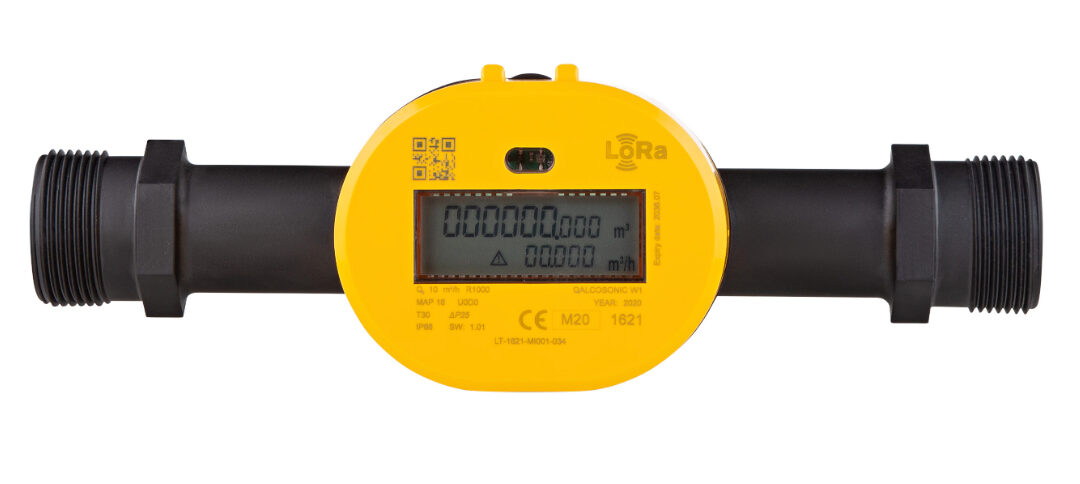
Most multifamily properties have no idea how much water each unit actually uses. The SI Submeter changes that, giving property owners unit-level visibility, accurate billing, and a direct path to stronger NOI.
The Bill Nobody Questions
Every month, property owners across the country open their water bill and absorb it as a cost of doing business. The number goes up. Rates increase. Usage fluctuates. And the owner pays the difference between what they collect in rent and what the utility charges.
In most multifamily properties, water is still managed with a single master meter. One reading for an entire building. One bill that gets divided up through flat fees, rent bundles, or rough estimates. Nobody knows which unit is using what. Nobody knows if a toilet has been running for three days straight on the fourth floor. Nobody knows if one resident is consuming three times more water than the unit next door.
The owner just pays the bill.
This is the norm across the industry, and it is quietly draining net operating income from thousands of properties every year. Not because anyone is being careless, but because there has never been an easy, reliable way to see what is actually happening at the unit level.
Until now.
What You Cannot See Is Costing You
Water is one of the largest variable expenses in multifamily housing. Unlike electricity or gas, which are often individually metered from the start, water tends to be lumped into a single master meter for the entire property. That means property owners are left guessing when it comes to allocating costs.
Some use a Ratio Utility Billing System (RUBS), which divides costs based on square footage, occupancy, or other estimates. It is better than nothing, but it is not based on actual usage. Residents who conserve water pay the same as those who waste it. And according to research from the EPA, RUBS does not produce any statistically significant reduction in water consumption compared to simply including utilities in the rent.
The result is a system where nobody has an incentive to conserve, the owner absorbs all the risk when rates climb, and waste goes undetected because there is no visibility into individual units.
That invisible waste adds up fast. A single running toilet can burn through 200 gallons a day. Multiply that across a building with hundreds of units and the numbers become staggering. The property owner is paying for every gallon, and most of the time, they do not even know the problem exists.
Precision at the Unit Level
The SI Submeter was built to solve this problem. It is an ultrasonic water meter that measures consumption for individual units with a level of accuracy that traditional mechanical meters cannot match.
Unlike conventional meters that rely on moving parts to measure flow, the SI Submeter uses static ultrasonic measurement. There are no turbines, no gears, nothing that wears down over time. This means the readings stay accurate year after year, even in environments where sand, sediment, air pockets, or low-flow conditions would throw off a mechanical meter.
It detects flow as low as 0.01 gallons per minute. That is sensitive enough to catch a slow drip that would go completely unnoticed by a standard meter. And because it uses ultrasonic technology, it does not measure air in the line, so property owners are only billed for actual water consumed.
The meter can be installed in any position, requires no straight pipe run, and measures flow in both directions. It connects to the SI-Mesh network through a built-in LoRaWAN communication interface, feeding real-time data directly into the SI-Dash reporting platform. Property teams can see consumption by unit, spot anomalies the moment they appear, and take action before small problems become expensive ones.
And it does all of this on a single battery that lasts more than 16 years.
When Residents Pay for What They Use, Everything Changes
The most immediate impact of submetering is financial. When property owners can bill residents based on actual water consumption rather than flat fees or estimates, the entire cost dynamic shifts.
Water goes from being a large, unpredictable expense absorbed by the owner to a transparent, recoverable cost shared fairly among residents. The property’s water bill effectively drops to near zero in operating terms, because the cost is allocated to the people actually using the resource.
That change flows directly to the bottom line. Net operating income improves. The property becomes more attractive to investors and buyers. And the owner is insulated from future rate increases because those costs pass through to residents based on real usage, not fixed estimates that fall behind as rates climb.
But the financial benefit is only part of the story. Research consistently shows that when residents can see their own water usage and know they are paying for it, consumption drops significantly. Studies have documented reductions of 25 to 40 percent in overall water use after submeters are installed. That is not a small adjustment. That is a fundamental shift in behavior that benefits the property, the residents, and the community’s water supply.
Built Different
Not all submeters are created equal. Mechanical meters with moving parts degrade over time, losing accuracy as components wear down. They require regular maintenance, are prone to failure in harsh water conditions, and often need replacement within a few years.
The SI Submeter was designed to eliminate those problems entirely. With no moving parts, there is nothing to wear out. The ultrasonic measurement technology maintains its precision over the life of the device. It carries an IP68 protection rating, meaning it is sealed against dust and water intrusion. The composite body is built to last in real-world plumbing environments, not just laboratory conditions.
The 9-digit, multi-line LCD display shows total volume and instantaneous flow rate simultaneously, giving maintenance teams immediate visual confirmation on-site. And because the meter communicates wirelessly through the SI-Mesh network, there is no need for manual reads, no technician visits, and no gaps in data.
For property owners managing multiple buildings or entire portfolios, this level of automation and reliability is not a luxury. It is a requirement.
The Bigger Picture
Water costs are rising across the country. Aging infrastructure, drought conditions, and increasing demand are pushing rates higher in nearly every market. For multifamily property owners, this trend is not going away.
The properties that will be best positioned in the years ahead are the ones that treat water as a managed resource rather than an uncontrolled expense. That starts with visibility. You cannot manage what you cannot measure, and you cannot measure what you cannot see.
The SI Submeter gives property teams the ability to see every gallon, in every unit, in real time. It turns water from a mystery into a metric. And it gives owners the data they need to protect their NOI, reduce waste, and build a more sustainable operation for the long term.
Frequently Asked Questions
What is the SI Submeter?
The SI Submeter is an ultrasonic water meter designed for individual unit-level measurement in multifamily, student housing, senior living, hospitality, and commercial properties. It uses static flow technology with no moving parts, delivering accurate readings over a battery life of more than 16 years with virtually zero maintenance.
How is ultrasonic measurement different from a traditional water meter?
Traditional mechanical meters use spinning turbines or gears to measure water flow. Over time, those moving parts wear down, reducing accuracy and requiring maintenance or replacement. The SI Submeter uses ultrasonic pulses to measure flow with no physical components in the water stream. This eliminates wear and tear, maintains accuracy over the life of the device, and performs reliably even in water with sediment, air, or low-flow conditions.
How sensitive is the SI Submeter?
The SI Submeter detects flow as low as 0.01 gallons per minute. This level of sensitivity can identify slow leaks like a running toilet flapper or a dripping fixture that would go completely undetected by a standard mechanical meter. Catching these small issues early prevents them from becoming large, costly problems.
Does the SI Submeter require regular maintenance?
No. Because there are no moving parts, the SI Submeter is essentially maintenance-free. The battery is rated for more than 16 years, which is the best battery life in the industry. The IP68-rated composite body is sealed against dust and water intrusion, making it durable enough for real-world plumbing environments without requiring routine service.
How does the SI Submeter connect to the Sensor Industries platform?
The SI Submeter features a built-in LoRaWAN communication interface operating on the US902-928 MHz band. It connects wirelessly to the SI-Mesh network, which feeds real-time consumption data into the SI-Dash reporting platform. Property teams can monitor usage by unit, receive alerts for unusual activity, and access historical data without manual meter reads or on-site visits.
What is RUBS and why is submetering better?
RUBS stands for Ratio Utility Billing System. It divides water costs among residents based on estimates like unit size, number of occupants, or other formulas rather than actual usage. While RUBS can help recover some costs, it does not incentivize conservation and research shows it produces no statistically significant reduction in water consumption. Submetering with the SI Submeter measures actual unit-level usage, creating fair billing, encouraging conservation, and giving property owners complete visibility into where water is going.
How much can submetering improve net operating income?
The impact varies by property, but the results are consistently significant. When residents are billed for actual usage, overall water consumption typically drops 25 to 40 percent. On top of that, the property owner recovers nearly 100 percent of remaining water costs through accurate billing. Most properties see a return on their submetering investment within 6 to 18 months, with the meters themselves lasting well beyond a decade.
Can the SI Submeter be installed in existing buildings?
Yes. The SI Submeter is designed for flexibility. It can be installed in any position, requires no straight pipe run, and measures flow in both directions. These features make it well-suited for both new construction and retrofit applications in existing multifamily, senior living, student housing, hospitality, and commercial properties.
Key Takeaways
- Most multifamily properties still rely on a single master meter, leaving owners with no visibility into unit-level water consumption.
- RUBS and flat-fee billing do not reduce water waste and leave property owners absorbing rising utility costs.
- The SI Submeter uses ultrasonic technology with no moving parts, delivering maintenance-free accuracy for over 16 years.
- Flow sensitivity as low as 0.01 GPM catches slow leaks that mechanical meters miss entirely.
- Submetering typically reduces overall water consumption by 25 to 40 percent once residents pay for actual usage.
- Real-time data flows wirelessly through the SI-Mesh network to the SI-Dash platform for 24/7 monitoring.
- Properties with submeters see improved NOI, stronger property valuations, and protection against future rate increases.
See exactly where your water is going. Unit by unit. In real time.
About Sensor Industries: We provide real-time water monitoring for multifamily, student housing, senior living, hospitality, and other multi-unit properties, helping teams cut waste, prevent damage, and protect NOI.